
Fatehpur Sikri: A Day Trip to Akbar’s Abandoned Capital
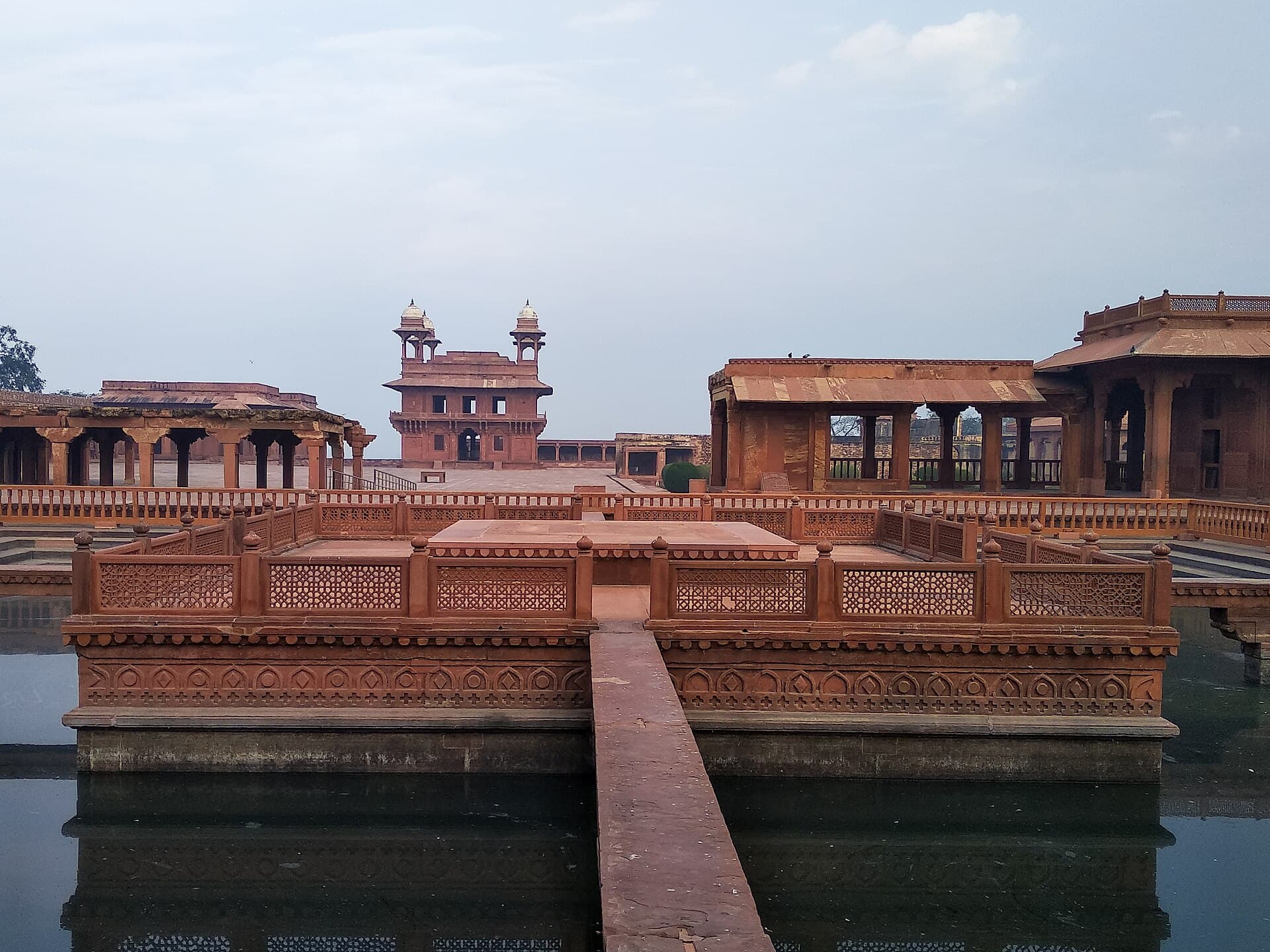
About an hour's drive west of Agra, on a long rocky ridge, stand the red sandstone palaces of Fatehpur Sikri. The emperor Akbar built this city in the second half of the 16th century as his new capital, filled it with courtyards, pavilions and a vast mosque, and then moved away only a few years later. What remains is one of the best-preserved Mughal cities in India and a UNESCO World Heritage Site.
The story of the city begins with a saint. Akbar, still without an heir, came to seek the blessing of the Sufi mystic Salim Chishti, who lived at Sikri. When a son was born soon after, the emperor named him Salim and chose this place for his grand new capital.
The royal palaces
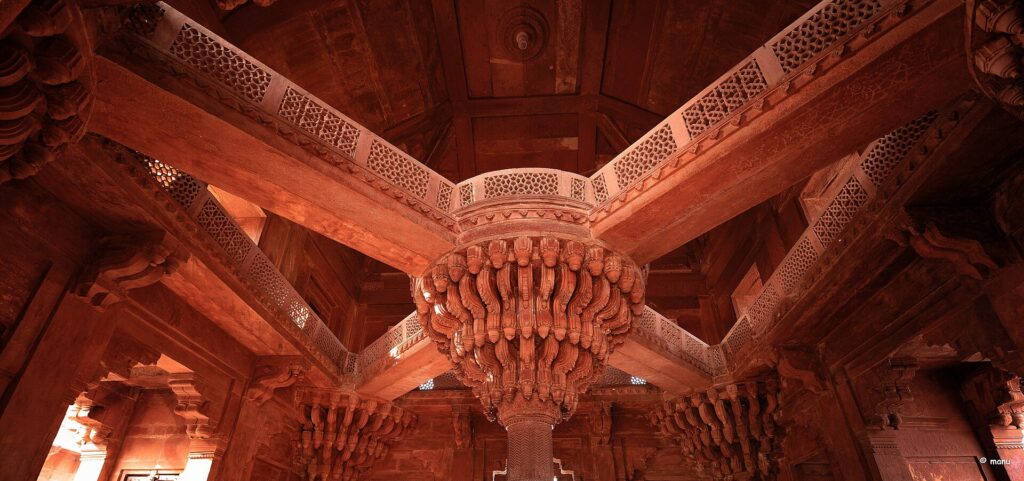
The palace complex is laid out around open courtyards that once buzzed with courtiers. The Diwan-i-Aam, or hall of public audience, is where the emperor heard petitions. The Diwan-i-Khas, nearby, is famous for its single carved central pillar, topped by a circular platform linked to the corners of the hall by stone bridges.
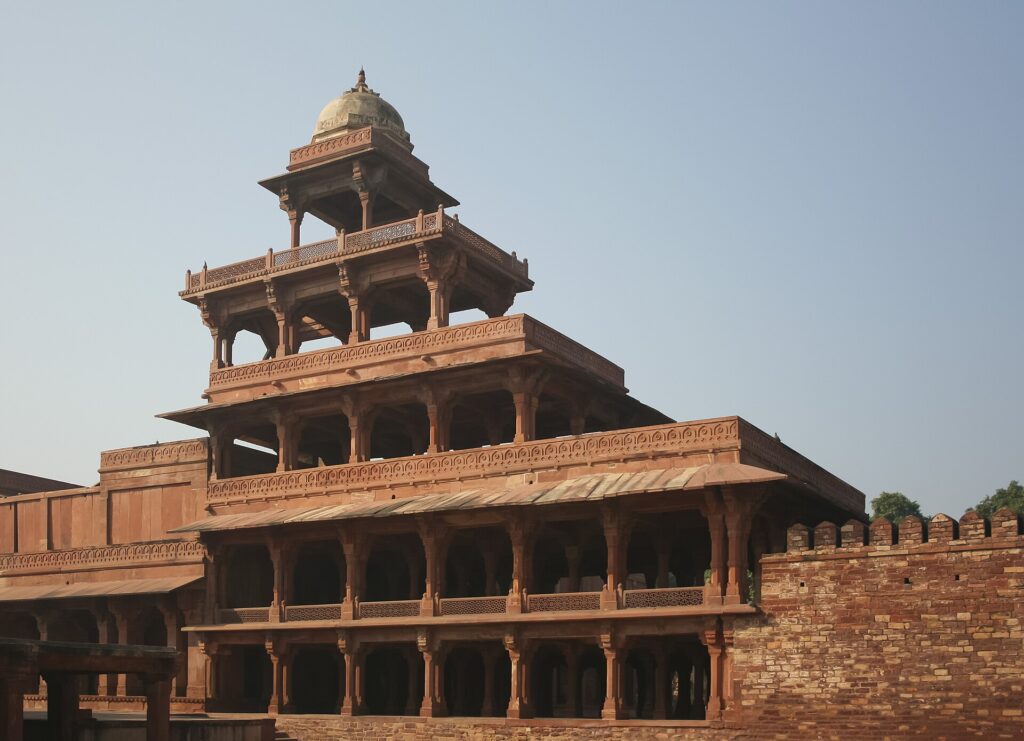
The Panch Mahal rises in five storeys of open columns, each smaller than the one below, designed to catch the breeze in the hot summers. Look also for the Anup Talao, an ornamental pool, and the palace associated with Akbar's queen, with its blend of Hindu and Islamic design.
Jama Masjid and the Buland Darwaza
A short walk from the palaces is the Jama Masjid, one of the largest mosques of its time. Its southern entrance, the Buland Darwaza, is a gateway of enormous scale, built to mark Akbar's victories, and the steps up to it give sweeping views over the surrounding plains.
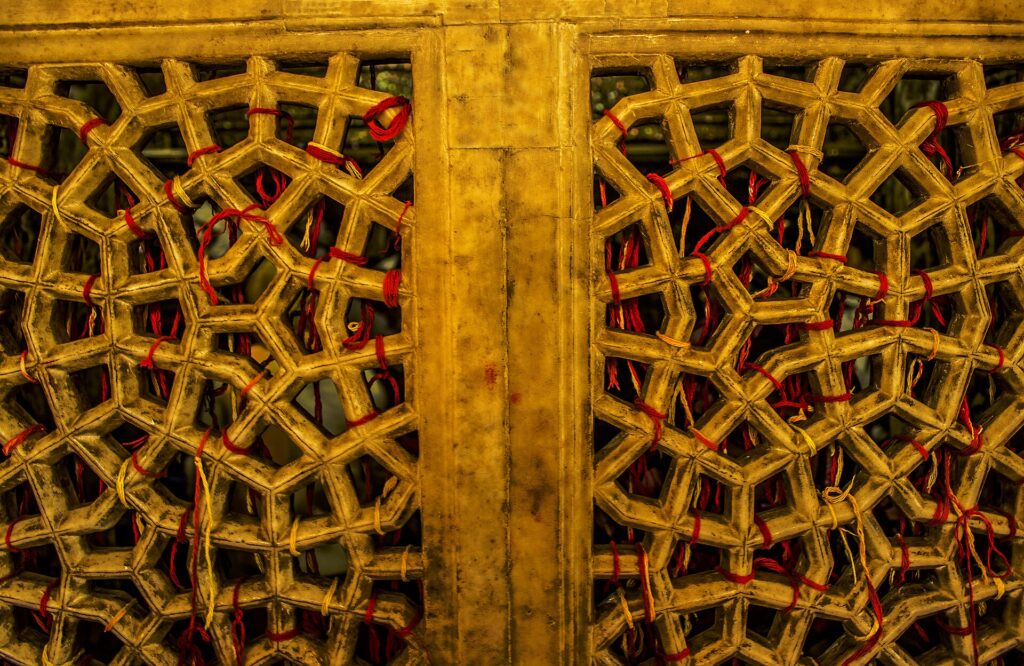
In the courtyard stands the white marble tomb of Salim Chishti, with some of the finest carved marble screens in India. Visitors of all faiths tie threads on the screens while making a wish, and return to untie them when their wish comes true.
Planning your visit
Fatehpur Sikri makes an easy half-day trip from Agra by car, and it can also be visited on the way to or from Jaipur. Go in the morning, when the stone is cooler and the light is good for photographs. Hire an approved guide at the entrance to understand the layout and stories, and politely ignore touts offering unofficial tours.
Wear comfortable shoes and modest clothing, and carry socks for the mosque, where you will remove your footwear on hot stone. With a couple of hours on the ridge, the silent courtyards and grand gateways make it easy to imagine the city in its brief, glittering prime.
Ready to explore Agra?
Book tours, treks and stays with verified local providers, with free cancellation on most experiences.
See things to do in Agra